

A reading that introduces a death prediction can cross a boundary you never agreed to. You can stop the topic, end the session and ask for a clear explanation of the provider’s complaint process. You do not have to accept the claim as fact.
This guide focuses on the conduct of the session: what clients can decline, what readers should avoid and how to document a concern. For the broader question of responding to a prediction, see death predictions and practical next steps.
A death claim is not a health assessment
A psychic reading cannot diagnose a terminal illness, determine that symptoms are harmless or establish when someone will die. A confident delivery does not change the kind of evidence being offered. Take actual health concerns to an appropriate healthcare professional.
The statement “the reader is 50% likely to be right” is not a valid calculation merely because an outcome can be described as yes or no. Two possible outcomes need not be equally likely. A meaningful probability needs a defined event, timeframe and supporting information; it cannot be assigned from the number of answer options.
If you want to evaluate a recorded claim rather than act on it, our prediction record-keeping method explains deadlines, evidence and unresolved outcomes. A log is not a substitute for medical care.
Set the scope before the session
Tell the reader which topic you want to discuss and which subjects you exclude. For example: “I am interested in reflecting on a work decision. I do not want predictions about death, illness or anyone else’s private health.”
Ask about the fee, duration and how to pause or finish. If the reader will not respect a stated limit, you can decline the service. A disclaimer does not require you to hear unwanted claims or make the interpretation accurate.
Before
Agree on the topic, limits, price and stopping process.
During
Interrupt unwanted content and end the conversation if needed.
After
Record the concern, request an appropriate remedy and find independent support.
Words you can use when a boundary is crossed
| Situation | A direct response |
|---|---|
| The reader introduces death or illness | “I did not agree to discuss that. Please stop this topic.” |
| The reader insists you need more details | “I do not want further predictions. I am ending the session.” |
| A paid intervention is offered | “I am not purchasing additional services. Send the written terms for the service I already booked.” |
| Follow-up messages continue | “Please stop contacting me about this prediction.” |
These are optional scripts, not a requirement to confront someone. If contact includes threats or you feel unsafe, prioritize appropriate local help and preserve relevant records. You can leave a conversation without winning an argument about belief.
Boundaries for readers
Do not present an impression as a diagnosis or a fixed lifespan. Do not claim that silence will endanger the client, that disbelief causes harm or that a fee can prevent a death. A client’s decision to stop should not be treated as an invitation to escalate.
Changing the wording to a general health warning or recommending a diet does not make an unsupported assessment appropriate. Keep the agreed service separate from medical advice, and do not tell someone to stop medication or replace qualified care.
For advertising context, the UK CAP guidance on psychic and spiritual services cautions against misleading claims, exploitative promises and unsupported health or fortune claims. It concerns UK non-broadcast advertising, not a universal legal rule for every private conversation. The practical boundary here is simpler: do not sell certainty or exploit fear.
Document a concern without oversharing
- Save the basics. Keep the booking confirmation, date, reader or provider name, fee and relevant messages.
- Record the specific conduct. Note the statement and any request you made to stop. Distinguish a quotation from your recollection.
- Name your request. For example, an explanation, correction, cessation of contact or consideration of a refund under the terms.
- Use the proper channel. Contact the provider’s support team, and ask your payment service about available dispute options where appropriate.
Do not publish another person’s private health information as evidence that a prediction was accurate. Keep complaint attachments limited to what is necessary. A complaint or payment dispute does not guarantee a refund. Our service-review and complaint guide provides a fuller outline.
Support the person, not the prediction
If someone tells you a reading has frightened them, you can acknowledge that it was upsetting without agreeing that the forecast is true. Ask whether they want listening, practical help or support finding an appropriate professional.
The NHS anxiety guide describes support for anxiety that affects daily life. A reading is not a reason to ignore symptoms, and symptoms are not proof of the reading. Seek urgent help for an actual emergency.
You do not need more paid predictions to regain permission to make ordinary choices. For further boundaries, read the prediction safety guide. If the claim came from tarot, see Death-card symbolism and its limits.
Frequently asked questions
1. Can a psychic reading diagnose a terminal illness?
No. A reading is not a medical assessment. Discuss actual symptoms or concerns with an appropriately qualified healthcare professional.
2. Does a death prediction have a 50% chance of being right?
Not simply because there are two possible outcomes. Probabilities depend on the event, timeframe and relevant evidence; a yes-or-no claim does not automatically produce equal odds.
3. Must I hear a topic I did not agree to discuss?
You can decline or end a reading. Agreeing to a session does not require accepting unwanted discussion of death, illness or other sensitive subjects.
4. What can I say to stop the conversation?
Try: “I do not want predictions about death or illness. Please stop this topic.” You do not need to debate whether the reader’s interpretation is genuine.
5. Does a frightening feeling prove the prediction?
No. An emotional response does not establish the claim. Focus on independently known facts and seek support for the distress if needed.
6. Should a reader share every impression?
No. An impression does not justify presenting an unsupported death or health claim as fact. Respect the agreed scope, uncertainty and the client’s wish to stop.
7. Can a reader soften a death prediction by giving diet advice?
That does not solve the underlying problem. A reader should not disguise an unsupported health assessment as lifestyle advice or tell a client to change treatment.
8. What if the reader asks for money to prevent the death?
Do not pay under pressure. Save the messages and receipts, consult someone you trust and contact the provider or payment service about any disputed transaction.
9. Should I book more readings for confirmation?
You do not need another prediction to decide that a reading is not medical evidence. Repeated paid confirmation can add conflicting claims rather than resolve the actual concern.
10. How can I complain without sharing private medical details?
State the date, service, relevant words, unwanted conduct and the remedy you request. Include only necessary evidence and redact third-party or unrelated sensitive information.
11. Will a complaint guarantee a refund?
No. Outcomes depend on the facts, terms and applicable process. Ask the provider or payment service about available options without assuming recovery.
12. How can a friend support someone frightened by a reading?
Listen without endorsing the prediction. Ask what support they want and help separate the reader’s claim from known facts and appropriate next steps.
13. When should I seek help for the distress?
Consider qualified support if anxiety persists, worsens or interferes with sleep or daily life. Seek urgent help for an actual emergency rather than waiting on a reading.
14. Is the cover a real consultation?
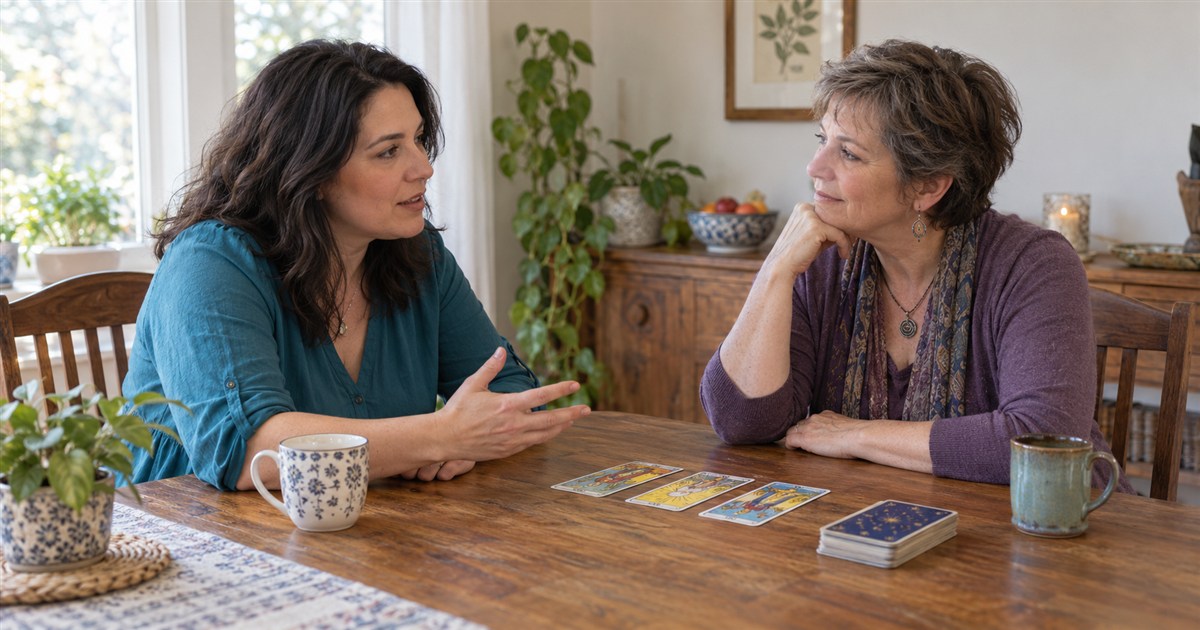
No. It is an AI-generated illustrative home-reading scene. It does not show an actual client, testimonial or medical consultation.
15. What should be agreed before a sensitive reading?
Clarify the topic, service limits, fee, duration and how either person can pause or end the session. A reader should respect a topic you exclude.
While I appreciate the intention behind this message, it seems rather dismissive of those genuinely seeking guidance from psychics. Not everyone has the luxury to simply disregard such predictions.
“Clear visualizations”—is that what we’re calling it now? How about just a good old-fashioned chat with loved ones instead?
This article offers a refreshing perspective on the often murky waters of psychic predictions. The emphasis on discernment is particularly poignant.
Irresponsibility aside, could there be any merit in preparing for potential outcomes? It’s a complex interplay between fate and free will.
*Laughs* So, basically, we should just ignore the grim reaper and eat more kale? Sounds like a solid plan!
But isn’t the act of predicting death inherently irresponsible? A true guide should foster hope, not fear.
‘If you see health deteriorating, suggest a better diet.’ Ah yes, because nothing says ‘I care’ like unsolicited health advice from a psychic!
‘Predicting death’—sounds like a surefire way to win friends and influence people! Bravo to those psychics with such social skills.
“Leave things unsaid”? Perhaps that’s the wisest advice I’ve heard all week. Some truths are best left unspoken to preserve peace of mind.
One must consider that death itself is an inevitability; however, the ethics of sharing such information remain contentious and worthy of further debate.